
Psychosocial risk management, aligned to ISO 45003
Australian WHS legislation now requires organisations to identify, assess and control psychosocial hazards at work. For most, the challenge isn't awareness - it's structure. This is a documented psychosocial risk control framework built to integrate with your existing WHS Management System.
A confidential conversation · no obligation · integrates with your existing WHS framework
At a glance
A documented psychosocial risk control framework, not another wellbeing conversation
Integrates with your WHS Management System and aligns to ISO 45003 Clauses 4, 6 and 8
Core psychosocial controls plus elective modules, selected by role exposure
Confidential, role-specific, repeatable and fully documentable
The shift from awareness to control
From discussion to implementation
High workload, emotional demand, fatigue, conflict and cumulative stress are recognised hazards under the current regulatory framework. These risks must be managed with reasonably practicable controls that are documented, monitored and reviewed.
Many workplaces have introduced conversations around wellbeing and psychological safety. Fewer have implemented structured operational controls that address psychosocial risk at a systems level.
The SafeWork MindShift System™ is built to function as a preventive, mitigative and responsive control set within your broader WHS framework. It supports organisations to:
Identify psychosocial hazards early, before they escalate.
Assess workload, role, conflict and exposure risks.
Implement structured control measures across roles and teams.
Monitor and review effectiveness over time.
Important distinction
This is not therapy
The SafeWork MindShift System™ is not clinical treatment. It is psychosocial risk management. The system operates within your WHS Management System and aligns directly with ISO 45003 Clauses 4, 6 and 8, supporting audit processes, regulatory review and internal assurance frameworks.
It does not replace your
EAP.
It does not diagnose mental health conditions.
It does not require disclosure of personal history.
Instead, it strengthens frontline capability and leadership accountability within your existing governance structures.
A structured Five-control framework
Risk managed across the full exposure lifecycle
Seven controls, each mapped to a clear purpose and aligned to ISO 45003.
01
Psychological Safety and Confidence at Work
Helps workers feel steadier, safer and more confident in workplace interactions without requiring personal disclosure.
This session supports confidence, self-trust, emotional steadiness, and the ability to remain composed during pressure, feedback, authority interactions or interpersonal tension.
02
Managing Workplace Pressure without Burning Out
Supports workers to regulate workload pressure and emotional demand before stress becomes overload or burnout.
This session helps workers pause, reset and respond more clearly during demanding work periods.
03
Staying Steady Through Change and Uncertainty
Supports emotional stability and clearer thinking when workplace change, shifting priorities, unclear expectations, or ambiguity increase pressure.
This session helps workers manage future focused, and remain more flexible, steady, and responsive during change.
04
Respect, Boundaries and Conflict Recovery at Work
Supports safer responses to interpersonal tension, workplace conflict, boundary pressure and recovery after difficult conversations.
This session helps reduce escalation, defensiveness, rumination and emotional reactivity.
05
Leadership under Pressure
Supports leaders to remain steady, clear, and measured when expectations, conflict, decisions, and team pressure increase.
This session helps leaders regulate their own pressure response so they can communicate and lead with more clarity
Additional Support Sessions
Alongside the core pathway, organisations can provide additional sessions to support specific workplace needs.
These include:
Reduce stress and anxiety in the workplace
The Pressure Reset Protocol
The space between pressure and choice
Emotional control and inner stability
Clear the overwhelm
Stop replaying the conversation
Healthy boundaries
The Relationship Pressure Reset
Rebuild self-trust and confidence
Sleep after stressful days
ISO 45003 Mapping Table
How each control aligns to the standard and frames within your risk management approach.
| Control (Regulatory) | Delivery Name | Control Purpose | ISO 45003 Alignment | Risk Management Framing |
|---|---|---|---|---|
| Control 1: PsychologicalSafety, confidence, and role interaction | Psychological safety and confidence at work | Helps workers feel steadier,safer and more confident in workplace interactions without requiring personal disclosure.Supports confidence and self trust during pressure and feedback | Clause4, Clause 6Clause 8 - Context & Hazard Identification and operational Controls | Preventive psychosocial control detecting risk before escalation |
| Control 2: Workplace Pressure and Burnout Prevention | Managing Workplace Pressure without burning out | Supports Workers to regulate work load pressure and emotional demand before stress becomes overload or burnout | Clause 6, Clause 8 - Risk Assessment Job demands, workload, and operational control | Exposure Management control that reduces cumulative stress risk linked to workload pressure, emotional demand, and sustained cognitive load |
| Control 3: Change, Ambiguity and Uncertainty Management | Staying Steady through Change and Uncertainty | Supports Emotional stability and clearer thinking when workplace change, shifting priorities, unclear expectations, or ambiguity increase pressure | Clause 4,Clause 6, Clause 8 Context change related psychosocial hazards and work design controls | Preventative Control for change-related psychosocial risk, supporting adaptability, clarity, and steadiness during uncertainty or transition |
| Control 4: Respect boundaries and conflict recovery | Respect boundaries and conflict recovery at work | Support safer responses to interpersonal tension, workplace conflict, boundary pressure, and recovery after difficult conversations | Clause 6, Clause 8 - Interpersonal risk, workplace relationships, conflict, and operational controls | Responsive control that reduces psychosocial risk linked to conflict, poor boundaries, emotional escalation, and post-interaction rumination |
| Control 5:Leadership behaviour under pressure | Respect boundaries and conflict recovery at work | Supports Leaders are to remain steady, clear, and measured when expectations conflict, decisions and team pressure increase | Clause6 Clause 8 - Leadership, Psychosocial Risk Identification and Operational Control | Leadership-based psychosocial control that treats leader behavior, communication, and pressure response as key risk factors in workplace psychological health and safety |
Where it fits
Designed for high-demand environments
The system supports organisations where workers are exposed to sustained cognitive or emotional load, time pressure and workload imbalance, conflict or escalation risk, distressing subject matter, and fatigue or recovery disruption. Every role carries pressure, and when cumulative exposure is unmanaged, risk increases. This framework supports early intervention before escalation and reduces the likelihood of foreseeable psychological harm.
★★★★★
Damian's story
After years working in the Justice Department and witnessing countless traumatic events, Damian began to see the quiet toll it was taking on his wellbeing and his family. Through the program he addressed the hidden impacts of post-traumatic stress and reclaimed control of his life.
Hear his powerful story in his own words.
Damian
Client, MindShift Mentors
How Cognitive Pattern Reprogramming Works
Rob Edmonds
Lead Practitioner

Rob built the SafeWork Mindshift System after seeing capable people in high-demand workplaces quietly struggling with stress, pressure and emotional overload - with nowhere practical to turn in the moment. He saw a clear gap between traditional therapy and what workers actually need: a private, accessible way to reset old reaction patterns before stress takes over. The result is audio-based Cognitive Pattern Reprogramming that gives people a way back to calm, clarity and control - right when they need it most.
Cognitive Pattern Reprogramming
While traditional therapy often focuses on endlessly talking about problems, this method works deeper right where automatic habits and stress responses are formed.
The 3 key mechanisms:
Skip the conscious chatter: we bypass over-analysis and go straight to the root of automatic responses.
No reliving the past: we reorganise unhelpful mental patterns without forcing anyone to rehash past emotions or trauma.
Effortless, sustainable change: by combining Strategic Psychotherapy and behavioural science, people build clearer thinking, better sleep and calmer responses simply by relaxing and listening.
Practical implementation
Demonstrating reasonably practicable controls
The SafeWork MindShift System™ integrates directly with existing WHS governance frameworks, enabling organisations to actively identify, control and review psychosocial risks - not simply acknowledge them.
Employees access structured, confidential sessions through the MindShift Members Hub with 24/7 availability, ensuring consistent support across teams and locations. Each implementation includes core psychosocial controls plus elective modules selected by role exposure. Programs are scalable, repeatable, role-specific and fully documentable.
Built using evidence-informed methods by qualified practitioners, the system supports improved concentration, recovery and psychological safety while aligning with contemporary regulatory expectations.
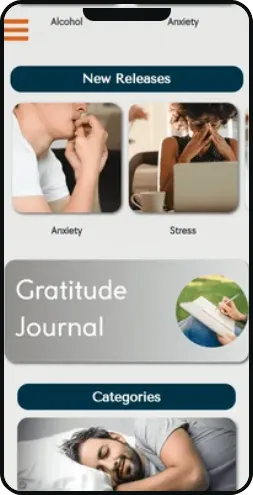
The SafeWork Members Hub
All SafeWork programs are delivered through a secure Members Hub, providing structured digital access for approved staff within your organisation.
Premium program library
Targeted sessions supporting stress regulation, behavioural change and workplace performance.
Built-in reflection journal
Integrated journalling supports awareness, emotional regulation and measurable progress.
Ongoing program updates
Content is refined to reflect evolving workplace pressures and needs.
Secure platform architecture
Enterprise-level security protects user privacy and organisational data.
On-demand access, 24/7
Staff can access support resources anytime, anywhere, across devices.
Good to know
Frequently asked questions
Do we have to dig up the past or relive trauma for this to work?
No. Unlike traditional talk therapies that often require revisiting past events, the MindShift Method is forward facing. We use Cognitive Pattern Reprogramming to change how the brain processes stress and threat in the present. It's a mechanistic brain reset designed for performance and regulation, not a clinical review of personal history.
How difficult is the system to use for busy teams?
The system is designed for efficiency. Core sessions are roughly 15 to 20 minutes long, and employees can fit these into their day during scheduled breaks or at home. Because it's delivered via smartphone, it removes the friction of attending off-site seminars or long classroom-based training.
Is employee usage private?
Individual privacy is a core pillar of the system. The organisation does not see which specific sessions an individual is using or their personal progress. This ensures workers feel safe using any session without fear of professional stigma or oversight.
We already have an EAP. Why do we need this?
Most Employee Assistance Programs are reactive - they wait for a crisis before offering a counselling session. The SafeWork MindShift System is a proactive primary control. It works alongside your EAP by providing daily cognitive support, helping reduce the volume of serious mental health claims before they escalate into workers compensation issues.
We're a small business with no EAP. Does this meet our legal obligations?
For small businesses where a full EAP is cost prohibitive, this system provides a vital psychosocial risk control. While the business remains responsible for its own safety records, the SafeWork MindShift System serves as a reasonably practicable intervention you provide to your team to help manage psychological hazards like stress and burnout.
Can I use the sessions while driving or working?
Strictly no. Because the sessions use deep cognitive reprogramming techniques, they must not be used while driving, operating heavy vehicles, or managing machinery. Users must be in a quiet, safe and stationary place where they can remain undisturbed for the full 15 to 20 minute duration. Safety is our primary concern.
How does this protect the business during a SafeWork audit?
Regulators look for a hierarchy of controls, and simply having a mental health policy is often insufficient. By providing your team with the SafeWork MindShift System, you can demonstrate to auditors that you've provided a tangible, evidence-informed tool to help staff manage the specific psychosocial risks inherent in their roles.
What if an employee doesn't want others to know they're using it?
The Members Hub interface is discreet and professional. To an outside observer, an employee using the system looks no different to someone listening to a podcast. There's no therapy branding, which significantly increases adoption rates in high-stigma industries.
Does this align with the ISO 45003 global standards?
Yes. The SafeWork MindShift System is architected to support the operational control requirements of ISO 45003:2021. It provides the practical mechanism for managing psychological health and safety, helping organisations bridge the gap between having a policy and taking action.
How long does it take to see a measurable change?
While many users report a noticeable improvement in calm and focus in as little as 5 days, the MindShift Method is built on a 21 day cycle. This is the timeframe required to achieve lasting Cognitive Pattern Reprogramming, ensuring new, healthier neural pathways are firmly established and the stress loop is effectively broken.
Reviewing your psychosocial risk controls?
MindShift Mentors supports government, health, justice and industry sectors across Australia. If you're assessing ISO 45003 alignment or WHS defensibility, now is the time to ensure your framework is structured and sustainable. Book a confidential WHS strategy call to explore how the SafeWork MindShift System™ integrates within your existing compliance structures.
Disclaimer: MindShift Mentors' Cognitive Pattern Reprogramming resources are for general wellbeing and personal development only. They are not a substitute for medical, psychological, dental or psychiatric advice, diagnosis or treatment. Always consult a qualified healthcare professional regarding any health concerns or before changing your treatment plan. Results may vary depending on individual circumstances.
© 2026 MindShift Mentors
© 2026 MindShift Mentors